GEOTECHNICALENGINEERING1
FORT LAUDERDALE
HomeLaboratoryLaboratory CBR test

Laboratory CBR Testing in Fort Lauderdale: Accurate Pavement Design Data

Site investigations you can build on.

LEARN MORE

Specifying a pavement section without a verified CBR value is a blind bet in Fort Lauderdale. Too many projects rely on assumed bearing ratios, only to face premature rutting and cracking within two seasons of tropical rainfall. The local subgrade varies from clean beach sand to silty marl and pockets of organic peat, and those layers do not respond the same way to compaction. A laboratory CBR test removes the guesswork by measuring the soil's resistance to penetration under controlled moisture and density conditions. We run the soaked CBR procedure as standard per ASTM D1883, because South Florida's high water table makes saturated subgrade the governing design case. For a complete pavement design package, we pair the CBR with Proctor tests to nail down optimum moisture, and grain size analysis to confirm fines content in the borrow material.

In Fort Lauderdale, soaked CBR is the only number that matters; design to dry conditions and the first tropical storm proves you wrong.
Our service areas

Process and scope

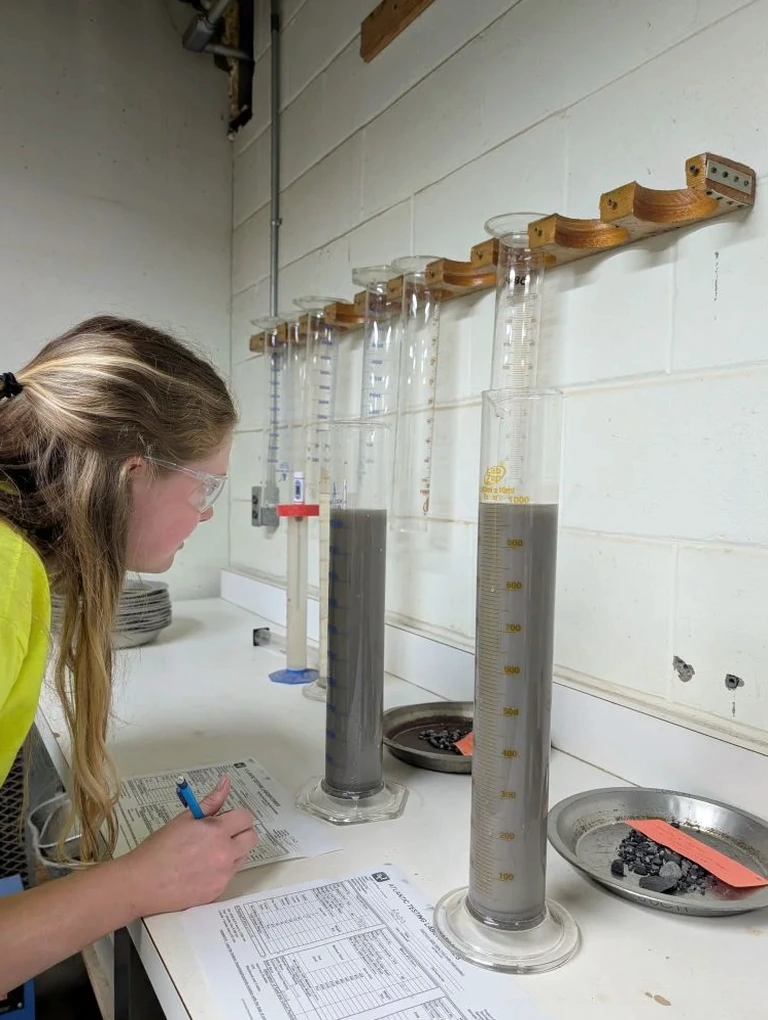
Fort Lauderdale sits on the Anastasia Formation, a mix of Pleistocene sand, coquina, and sandy limestone, overlain by Holocene marine and marsh deposits. The water table often sits just 3 to 5 feet below the surface, which means the soaked CBR is the only number that matters for design. We prepare remolded specimens at 95% of maximum dry density, submerge them for 96 hours, and measure penetration resistance with a calibrated loading press at 0.05 inches per minute. The result is a single CBR value at 0.1-inch penetration, reported alongside the swell percentage and moisture content change. These three parameters tell you whether the subgrade will pump fines, heave after storms, or lose bearing capacity when saturated. In stabilized base layers, we also run unsoaked CBR to quantify the immediate gain from cement or lime treatment before the pavement goes down.
Laboratory CBR Testing in Fort Lauderdale: Accurate Pavement Design Data
Technical reference — Fort Lauderdale

Local considerations

A parking lot in Rio Vista built on dense sand might yield a CBR above 15 even when soaked, while a commercial pad near Port Everglades on dredged fill with organic silt can drop below 3 after saturation. That gap means the difference between 4 inches of asphalt and a full-depth reconstruction in under five years. The most costly mistake we see is using a single assumed CBR value across an entire site without sampling each soil unit separately. Fill layers placed without density control, unexpected muck pockets, and mixing different borrow sources all create CBR variability that the pavement section must accommodate. A subgrade with CBR under 3 requires either chemical stabilization or a thicker aggregate base; skipping that step transfers all the stress to the asphalt, and Florida sun plus standing water accelerates the failure.

Need a geotechnical assessment?

Reply within 24h.

Email: contact@geotechnicalengineering1.sbs

Applicable standards

ASTM D1883-21, ASTM D698 (Standard Proctor), ASTM D1557 (Modified Proctor for high-traffic designs), AASHTO T-193, FDOT Standard Specifications for Road and Bridge Construction, Section 160

Typical values

ParameterTypical value
Standard methodASTM D1883-21
Specimen compaction95% of max dry density (standard Proctor)
Soaking period96 hours submerged
Penetration rate0.05 in/min
Surcharge weight10 lb (simulates pavement + traffic)
Reported CBRAt 0.1-inch and 0.2-inch penetration
Swell measurementDial gauge, recorded every 24 hours

Common questions

How much does a laboratory CBR test cost in Fort Lauderdale?
Why does Fort Lauderdale require soaked CBR instead of unsoaked?

The water table in Broward County sits high, often within 3 to 5 feet of finish grade, and tropical rainfall saturates the upper subgrade quickly. A soil that holds up fine when dry can lose half its bearing capacity when soaked. The soaked CBR per ASTM D1883 simulates that worst-case condition, which is what governs pavement thickness under AASHTO 1993 and FDOT design procedures.

What CBR value do I need for a commercial parking lot in Fort Lauderdale?

For light-duty parking lots, FDOT and most local geotechnical consultants target a soaked CBR of 6 or higher at 95% compaction. If your subgrade tests below 4, we typically recommend either over-excavating and replacing with select fill, or stabilizing the top 12 inches with cement or lime to push the CBR above 10 before placing the base course.

Location and service area

We serve projects across Fort Lauderdale and surrounding areas.

View larger map