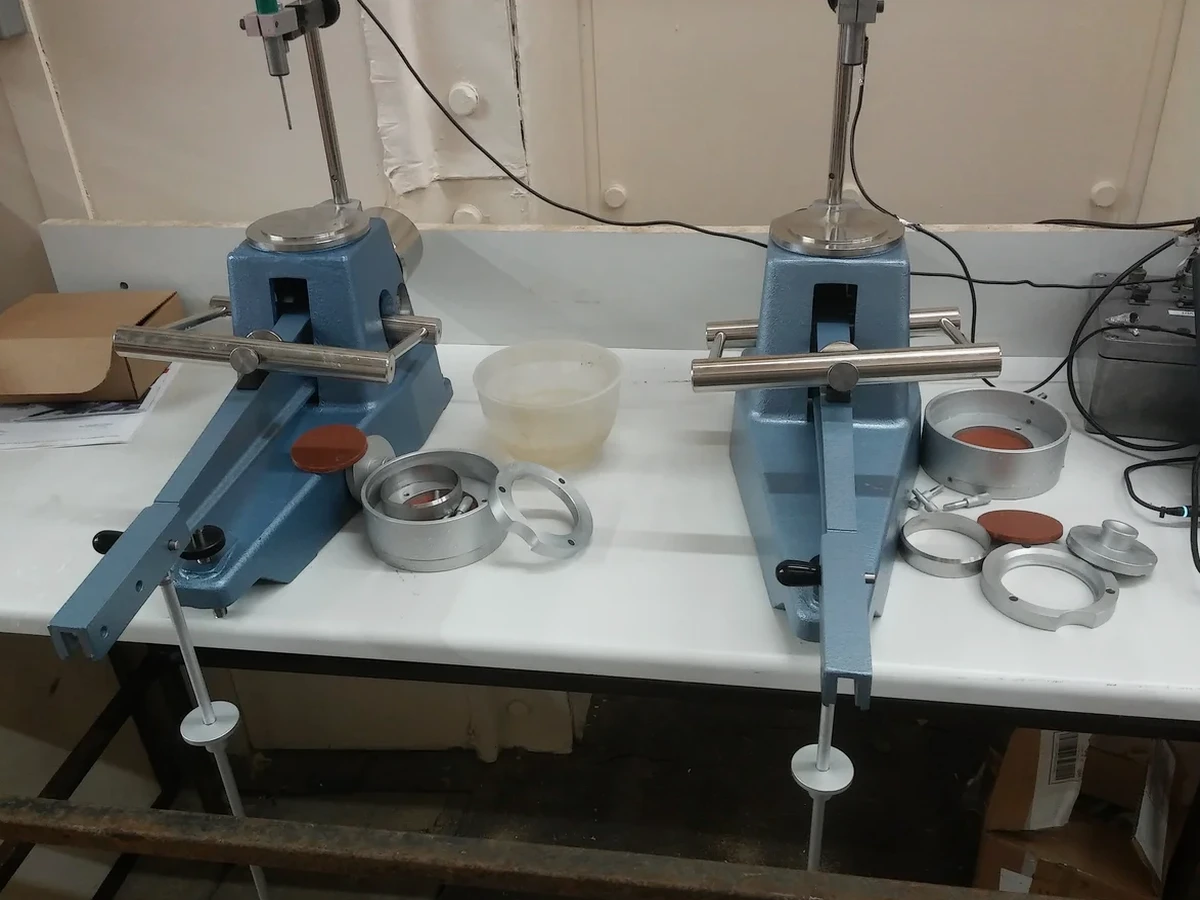
Geotechnical laboratory testing forms the analytical backbone of any construction or infrastructure project in Fort Lauderdale, providing the quantitative data engineers need to design safe and durable foundations. This category encompasses a suite of standardized physical and mechanical tests performed on soil and rock samples retrieved from the subsurface. The primary goal is to classify the soil, predict its behavior under load, and assess its suitability for the intended use. In a region heavily influenced by its coastal environment, understanding the precise engineering properties of the ground is not just a regulatory step but a fundamental necessity for mitigating risks associated with settlement, slope stability, and groundwater interaction.
Fort Lauderdale's geology presents a unique set of challenges that make comprehensive laboratory analysis indispensable. The city is built upon the Anastasia Formation, characterized by layers of sand, shell fragments, and limestone, often interbedded with organic silts and clays from ancient mangrove swamps. This subsurface profile is highly variable, with zones of loose, compressible sands and pockets of soft, high-plasticity clays that can cause significant differential settlement. The shallow water table, typical of South Florida, further complicates the soil's behavior, making the accurate determination of moisture content and its effects on soil strength a critical component of any investigation.
Adherence to established standards is mandatory for all laboratory procedures to ensure the reliability and legal defensibility of the results. In the United States, the primary governing standards are those published by ASTM International, specifically ASTM D422 for grain size analysis and ASTM D4318 for Atterberg limits. These standards dictate everything from sample preparation and testing apparatus to the precise methodology and reporting format. Additionally, project specifications often reference guidelines from the American Association of State Highway and Transportation Officials (AASHTO) and local Florida Department of Transportation (FDOT) requirements, which may have more stringent criteria for projects involving public infrastructure. A certified laboratory ensures full traceability and compliance with these rigorous protocols.
The demand for these laboratory services spans a wide range of local projects. High-rise condominiums along the beachfront require deep foundations like auger cast piles, where the friction and end-bearing capacity are derived directly from soil classification tests. The analysis of fine-grained soils through Atterberg limits is particularly crucial for designing pavement subgrades for commercial developments and road widening projects, preventing costly failures from expansive or frost-susceptible soils. Even residential construction on marginal land necessitates basic classification and compaction testing to satisfy building code requirements. Environmental remediation sites also rely on physical soil characterization to model contaminant transport pathways effectively.
The primary purpose is to accurately determine the engineering and physical properties of subsurface soils and rock. This data, including strength, compressibility, and permeability, is essential for engineers to design safe, stable, and economical foundations for buildings, bridges, and other infrastructure. It eliminates the uncertainty of relying on visual field classifications alone.
Fort Lauderdale's coastal geology, with its layers of loose sands, organic silts, and porous limestone, often requires specialized testing. The high water table and potential for compressible soils mean tests for consolidation and moisture-density relationships are critical. These conditions demand a rigorous approach to classification to accurately predict settlement and select appropriate foundation systems.
The primary standards are established by ASTM International. The key tests are governed by ASTM D422 (Standard Test Method for Particle-Size Analysis of Soils) and ASTM D4318 (Standard Test Methods for Liquid Limit, Plastic Limit, and Plasticity Index of Soils). Projects with public funding may also require adherence to AASHTO or Florida Department of Transportation (FDOT) specifications.
A grain size analysis, using sieves and a hydrometer, quantifies the distribution of particle sizes in a soil, from gravel down to clay-sized particles. Atterberg limits tests are performed on the fine-grained portion of the soil to determine its plasticity characteristics by measuring the moisture contents at which it changes between liquid, plastic, and solid states. Together, they provide a complete soil classification.
We serve projects across Fort Lauderdale and surrounding areas.