GEOTECHNICALENGINEERING1
FORT LAUDERDALE
HomeGround improvementStone column design

Stone Column Design in Fort Lauderdale: Ground Improvement Engineered for Coastal Soils

Site investigations you can build on.

LEARN MORE

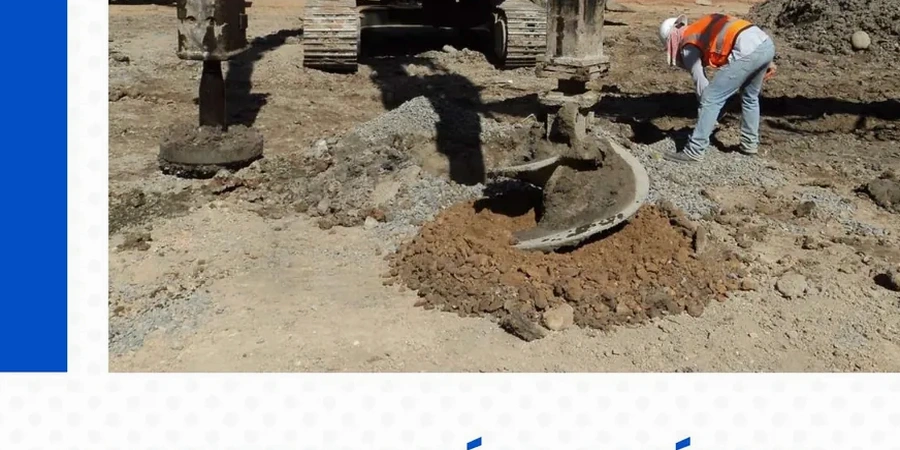
Fort Lauderdale sits barely 9 feet above sea level, and that elevation tells you everything you need to know about the soils under our feet. The city's subsurface is a layered mix of loose to medium-dense sands, silts, and occasional organic deposits from the Everglades fringe, all shaped by a high water table that rarely drops below 5 feet. We deal with this reality every single day. For developers and contractors in Fort Lauderdale, traditional deep foundations can punch a serious hole in the budget. Stone column design flips that equation. Instead of fighting the weak ground, we densify and reinforce it, turning problematic Fort Lauderdale soils into a working platform. The approach reduces total and differential settlement while accelerating construction timelines, something that matters when you are building near the Intracoastal or the New River. We often pair the CPT test data with our design models to map exactly where the soft lenses sit before laying out the column grid.

A stone column field in Fort Lauderdale does not just support a slab. It creates a vertical drainage network that protects the structure when the water table rises.
Our service areas

Process and scope

The coastal humidity and daily summer thunderstorms in Fort Lauderdale do more than just rust outdoor furniture. They keep the near-surface sands in a perpetually moist state, which complicates densification if you do not account for pore water pressure dissipation. A properly engineered stone column design in this environment has to address drainage continuity and lateral confinement from the very first calculation. We model the native soil's undrained shear strength and the column's internal friction angle to ensure the composite ground mass can handle the design loads. Using a bottom-feed vibro-replacement method, we install columns that drain excess pore pressure during seismic events, a critical detail given that Broward County sits in a moderate seismic zone per ASCE 7. The design also integrates with liquefaction mitigation strategies when granular soils below the water table show a factor of safety below 1.1 under the design earthquake. Each column diameter, typically 2.5 to 4 feet, gets spaced in a triangular or square grid pattern optimized through settlement analysis. We verify the improvement with post-installation modulus tests, ensuring the treated ground meets the bearing capacity and settlement criteria specified by the project geotechnical engineer.
Stone Column Design in Fort Lauderdale: Ground Improvement Engineered for Coastal Soils
Technical reference — Fort Lauderdale

Local considerations

Drive west from the barrier island toward I-95, and the ground changes in ways that can wreck a foundation schedule. The coastal ridge near Las Olas sits on slightly denser Pleistocene sands, while areas closer to the Everglades drainage basin often hide compressible organic layers just a few feet down. If the stone column design does not adapt to this transition, you end up with differential settlement that cracks slabs and tilts structural frames. We have seen it happen on projects where the soil investigation stopped too early. The biggest risk is assuming the subsurface is uniform across the site. A stone column grid that works beautifully on the eastern half can leave the western half underperforming if the organic content or fines percentage shifts. We mitigate this by running multiple CPT soundings across the footprint and adjusting the area replacement ratio zone by zone. In Fort Lauderdale, where stormwater infiltration and tidal fluctuations keep the groundwater in constant motion, the column design must also prevent fines migration into the stone, a long-term durability concern that our gradation specs directly address.

Need a geotechnical assessment?

Reply within 24h.

Email: contact@geotechnicalengineering1.sbs

Applicable standards

ASTM D1586-18, ASTM D2487-17, ASCE 7-22, IBC 2021, FHWA-NHI-16-072

Typical values

ParameterTypical value
Typical column diameter24 to 48 in
Design grid patternTriangular or square
Replacement ratio10% to 35%
Target bearing capacity after improvement4,000 to 8,000 psf
Post-treatment settlement reduction40% to 70%
Applicable depth range10 to 65 ft below grade
Primary ground improvement mechanismDensification and reinforcement

Common questions

How does stone column design handle Fort Lauderdale's high water table?

The design incorporates the high groundwater as a permanent condition. We use a bottom-feed vibro-replacement method that keeps the stone column intact during installation below the water table, and the column itself acts as a vertical drain, dissipating excess pore pressure rather than trapping it.

What does a stone column design package typically cost for a Fort Lauderdale project?
Can stone columns replace deep pile foundations entirely in Fort Lauderdale?

In many cases, yes. For structures up to about 8 stories on the sandy soils common in Fort Lauderdale, a properly designed stone column grid can support the loads with acceptable settlement. For heavier high-rises or sites with very thick organic layers, we sometimes combine stone columns with a rigid inclusion system rather than going to full deep piles.

Location and service area

We serve projects across Fort Lauderdale and surrounding areas.

View larger map