Site investigations you can build on.
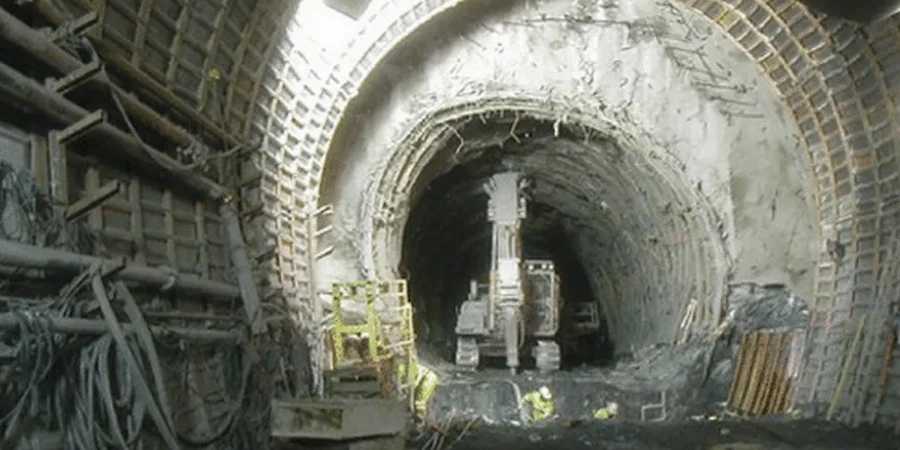
LEARN MOREUnderground excavations in Fort Lauderdale represent a critical discipline within geotechnical engineering, encompassing the planning, design, construction, and monitoring of subterranean spaces. This category covers everything from shallow utility trenches to deep shafts and soft-ground tunnels. Given the city's dense coastal development and high water table, these activities are not merely construction tasks—they are complex engineering operations that demand rigorous subsurface investigation. The importance of controlled underground excavation here cannot be overstated, as failures can lead to catastrophic ground loss, flooding, structural damage to adjacent buildings, and significant public safety hazards. Proper execution ensures that essential infrastructure can be built or upgraded without compromising the stability of the urban environment above.
Fort Lauderdale's geology presents formidable challenges for any underground work. The near-surface stratigraphy is dominated by the Anastasia Formation, characterized by alternating layers of poorly consolidated sands, silts, and porous limestone or coquina. These soils are highly permeable and often fully saturated, with the groundwater table lying just a few feet below ground surface. This creates a dual threat: the immediate risk of hydraulic instability and running ground during excavation, and the long-term challenge of buoyancy control for permanent structures. The soft, heterogeneous nature of these deposits means that ground behavior can change abruptly over short distances, making comprehensive geotechnical analysis for soft soil tunnels absolutely essential before any excavation commences.
Regulatory compliance in Florida is governed by a framework designed to protect life and property in these difficult conditions. The Florida Building Code (FBC) incorporates stringent geotechnical and structural provisions, while the Occupational Safety and Health Administration (OSHA) mandates strict adherence to its Excavation and Trenching Standard (29 CFR 1926 Subpart P) for worker safety. For projects involving underground utilities, the Florida Department of Transportation (FDOT) Standard Specifications for Road and Bridge Construction provide critical guidelines. Furthermore, the Underground Facility Damage Prevention and Safety Act (Chapter 556, Florida Statutes) legally requires contacting Sunshine 811 for utility locating before any excavation. These mandates collectively enforce a systematic approach to risk management, from design through construction.
The types of projects in Fort Lauderdale that rely on this specialized expertise are diverse and vital to the region's growth and resilience. They include the installation of deep gravity sewer lines, stormwater management vaults, and utility tunnels for power and communications. Foundation construction for high-rise buildings often requires deep excavations for mat foundations or piled rafts, demanding sophisticated geotechnical design of deep excavations. Coastal resilience projects, such as seawall replacements and pump station installations, also fall squarely within this category. Moreover, the increasing use of trenchless technology for infrastructure rehabilitation requires precise control to avoid settlement, making continuous geotechnical excavation monitoring a non-negotiable component of modern urban construction.
The primary risk is groundwater-induced instability due to the extremely high water table in porous limestone and sand. This can cause sudden flooding, soil piping, and basal heave, leading to rapid collapse of excavation walls and severe settlement of surrounding ground and structures if not properly dewatered and supported.
Excavation safety is federally mandated by OSHA's 29 CFR 1926 Subpart P. Shoring and structural design must comply with the Florida Building Code. For public projects, FDOT Standard Specifications often apply. Additionally, Florida Statute Chapter 556 requires mandatory utility locating via Sunshine 811 before any digging begins.
Fort Lauderdale's geology is challenging due to the Anastasia Formation's mix of highly porous, water-saturated limestone, loose sands, and soft silts. This heterogeneous, soft-ground condition is prone to running ground, erratic boulders, and requires specialized tunnel boring machines with face pressure control to prevent sudden collapse and surface settlement.
Continuous monitoring is vital because the high groundwater and soft soils can cause rapid, unexpected movements. Real-time data on wall deflection, groundwater levels, and adjacent building settlement allows engineers to immediately detect dangerous trends and implement contingency measures, preventing structural damage and ensuring worker safety in a dynamic environment.
We serve projects across Fort Lauderdale and surrounding areas.