GEOTECHNICALENGINEERING1
FORT LAUDERDALE
HomeInvestigationSPT (Standard Penetration Test)

SPT Testing in Fort Lauderdale: Reliable N-Value Data for Coastal Construction

Site investigations you can build on.

LEARN MORE

Too many foundation bids in Fort Lauderdale come in blind—relying on old county soil maps instead of real borehole data. We have pulled auger after auger through clean sand that looked competent on paper but refused to hold a simple spread footing. The Standard Penetration Test clears up that ambiguity fast. Every two feet of penetration gives you a measured blow count and a disturbed sample you can log, photograph, and reference later. In a city where the water table sits just a few feet below the slab and limestone can switch to loose sand in half a block, skipping site-specific SPT work is a gamble that costs more than the rig mobilization.
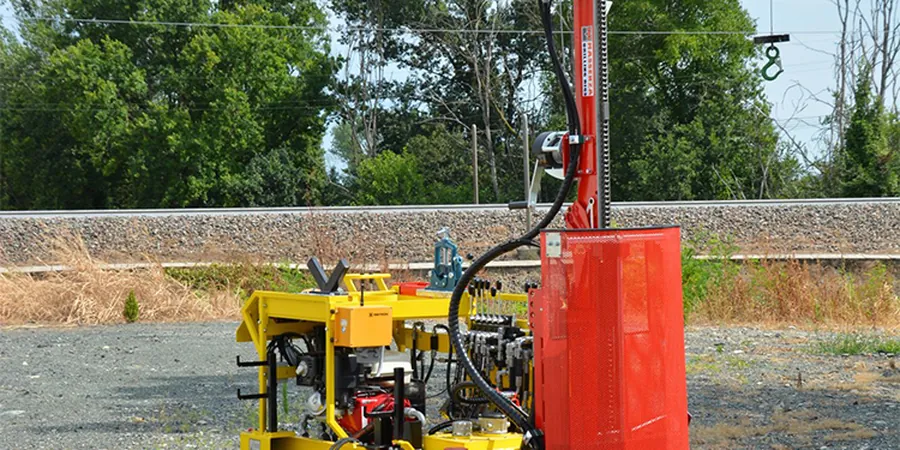
Our crews run truck-mounted CME rigs that can handle the tight access typical of Fort Lauderdale’s older beach neighborhoods, and we pair the SPT profiles with a grain-size analysis when gradation matters for liquefaction screening or drainage design. For sites where silty layers complicate drainage, we also recommend an in-situ permeability test to get realistic infiltration rates before finalizing the stormwater plan.

SPT refusal on shallow limestone in Fort Lauderdale is rarely the end of the story—more often it masks softer material beneath that governs settlement.
Our service areas

Process and scope

ASTM D1586-18 governs every split-spoon drive we perform in Fort Lauderdale, and the standard matters here because of South Florida’s unique stratigraphy—thin crust of silty sand, then marine limestone or loose calcareous sand, then the Fort Thompson Formation. Refusal on a weathered caprock at 12 feet can be misinterpreted as end-bearing bedrock when it is actually a thin lens floating over much softer material. Our field logs record hammer type (safety hammer with automatic trip), sampler penetration per six-inch increment, and groundwater depth measured at the time of drilling and again after stabilization.
We also apply corrections where the project requires: N60 for energy normalization, N1,60 for overburden stress, and N1,60cs for fines content when evaluating liquefaction potential per Youd-Idriss 2001. The same borehole that provides SPT data yields split-spoon samples suitable for lab testing—Atterberg limits, grain-size distribution, and carbonate content—which gives the geotechnical engineer a complete dataset without mobilizing a separate sampling crew. For deeper stratigraphic control where refusal is expected above 100 feet, many teams complement the SPT program with a CPT sounding to capture continuous tip resistance through the limestone interbeds.
SPT Testing in Fort Lauderdale: Reliable N-Value Data for Coastal Construction
Technical reference — Fort Lauderdale

Local considerations

Fort Lauderdale’s subsurface is a Pleistocene puzzle: the Anastasia Formation limestone can be dense enough to yield SPT refusal above 50 blows, yet it often overlies loose quartz sand and shell hash that compress under load. We have seen projects on Las Olas Isles where refusal at 28 feet gave a false sense of security, only to discover a 6-foot silty lens beneath the caprock that caused differential settlement in the parking garage slab.
The high groundwater table—routinely encountered at 4 to 6 feet below grade—complicates open-hole stability and can wash fines into the borehole if casing is not advanced promptly. In the western sections near the Everglades, organic peat layers just a few feet thick show near-zero blow counts and must be bypassed with deep foundations. Without SPT logs at tight vertical intervals, it is impossible to separate a thin peat seam from a thick compressible layer, and that distinction drives the choice between ground improvement and driven piles. For sites in the eastern barrier island zone, we recommend integrating the SPT dataset with a liquefaction assessment that uses N1,60cs values to calculate factor of safety under the ASCE 7-22 design earthquake.

Need a geotechnical assessment?

Reply within 24h.

Email: contact@geotechnicalengineering1.sbs

Applicable standards

ASTM D1586-18, ASTM D2487-17, ASCE 7-22, IBC 2021 (Florida Building Code 8th Edition)

Typical values

ParameterTypical value
Applicable standardASTM D1586-18
Hammer typeSafety hammer with automatic trip (donut hammer available)
SamplerStandard split-spoon, 2" O.D., 18" length
Typical depth range in Fort Lauderdale10 to 80 ft (refusal on limestone common at 25–50 ft)
Energy correction (N60)Applied when rod length > 10 ft or hammer efficiency calibrated
Groundwater measurementDuring drilling and after 24-hr stabilization
ReportingBlow counts per 6-inch increment, recovery, soil description per ASTM D2487

Common questions

How deep do you typically drill for an SPT investigation in Fort Lauderdale?

Most residential and mid-rise commercial borings go to 40 or 50 feet, or until we hit sustained refusal on competent limestone. For deep foundations or parking garages, we often extend to 80 feet using mud-rotary below the auger refusal depth to confirm there is no compressible layer beneath the caprock.

What does an SPT program cost in the Fort Lauderdale area?
Can SPT borings penetrate the limestone layers common under Fort Lauderdale?

Hollow-stem augers can handle weathered limestone with N-values up to about 50 blows per foot. When the formation becomes massive and well-cemented, the auger will refuse and we switch to a mud-rotary setup with a rock bit to advance the hole and sample the underlying material. Refusal depth is noted clearly in the log so the engineer can decide whether it represents a reliable bearing stratum.

Do you handle permitting and utility clearance for the drill sites?

We coordinate with Sunshine 811 for utility locating as required by Florida law, and our field supervisor handles the right-of-way permitting through Broward County or the City of Fort Lauderdale when borings are in the public right-of-way. Private property borings require only the owner’s written permission, which we help secure before mobilization.

Location and service area

We serve projects across Fort Lauderdale and surrounding areas.

View larger map